
Email Us
sales@oritcranes.com



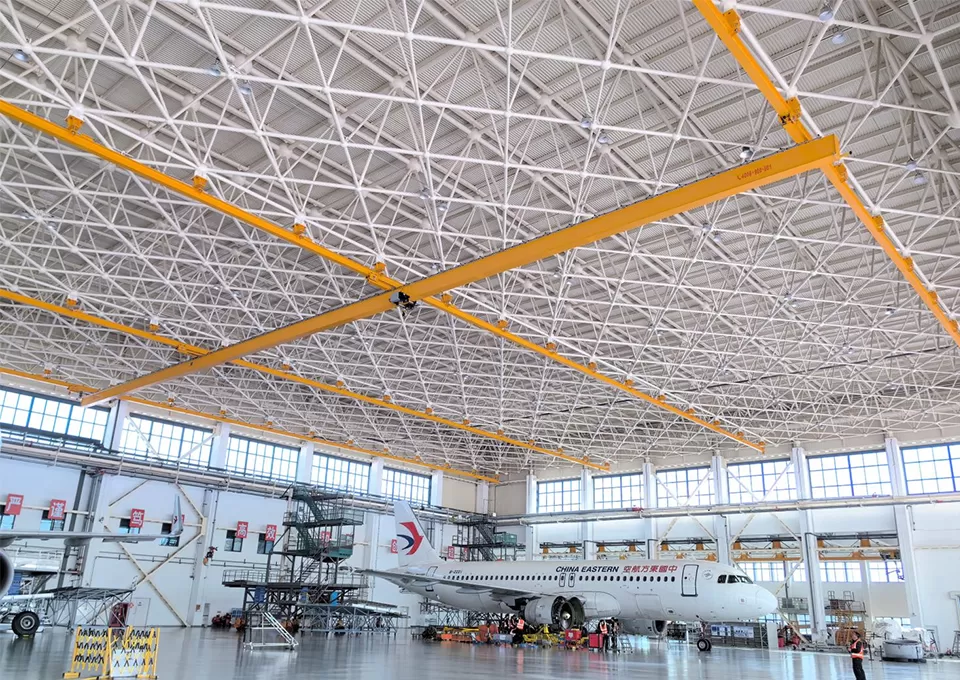
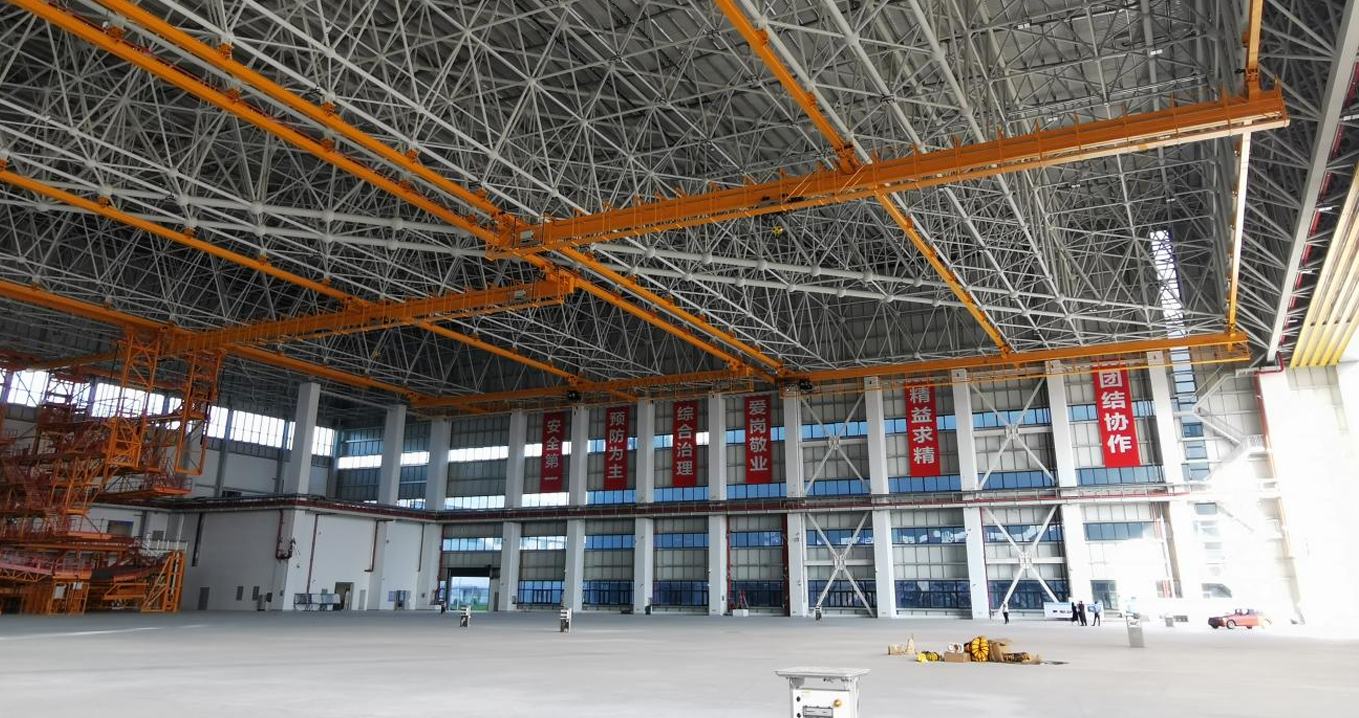
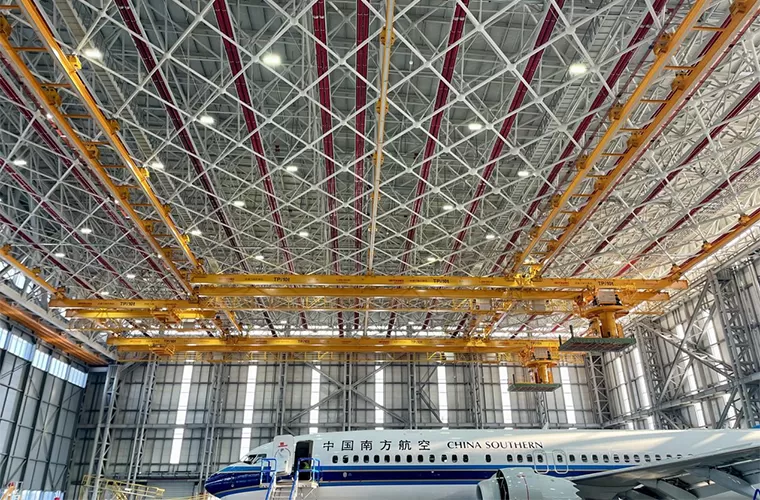
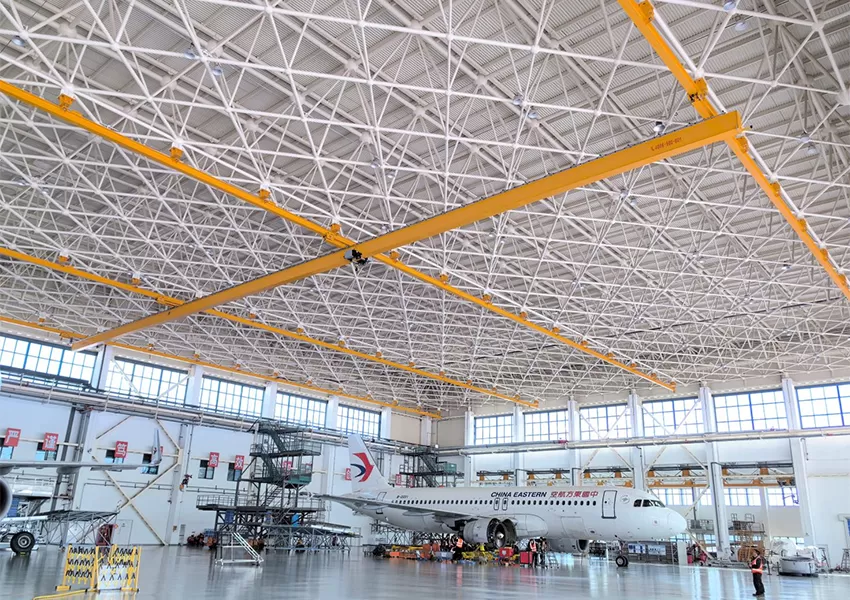
Multiple suspension points evenly share loads, reducing concentrated pressure on roof structures. Compatible with large-span grid roofs and lowers construction costs.
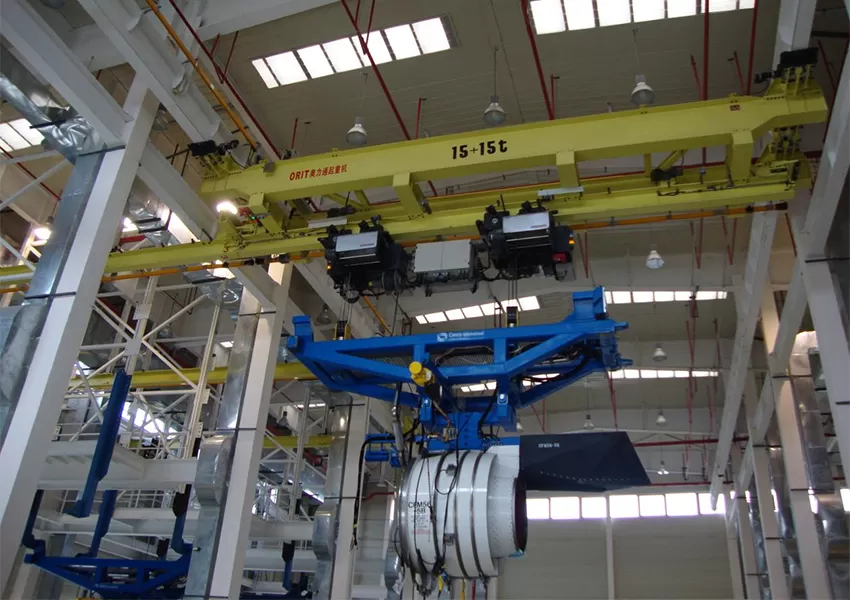
Combined with variable frequency drive and anti-sway system, the multi-point suspension design minimizes swing and delivers high positioning accuracy, protecting delicate aviation components during aircraft MRO work.
Span length can be adjusted by adding or removing suspension points, with a maximum span of 100 meters, perfectly suited for oversized aviation workspaces.
Multi-point restraint effectively prevents side bending and rail gnawing under eccentric loads. The crane resists deformation, offering long service life and enhanced operational safety for aircraft maintenance.
Designed for high-standard large-span facilities, widely deployed in aircraft MRO hangars and aviation manufacturing plants, supporting maintenance operations for all types of aircraft.
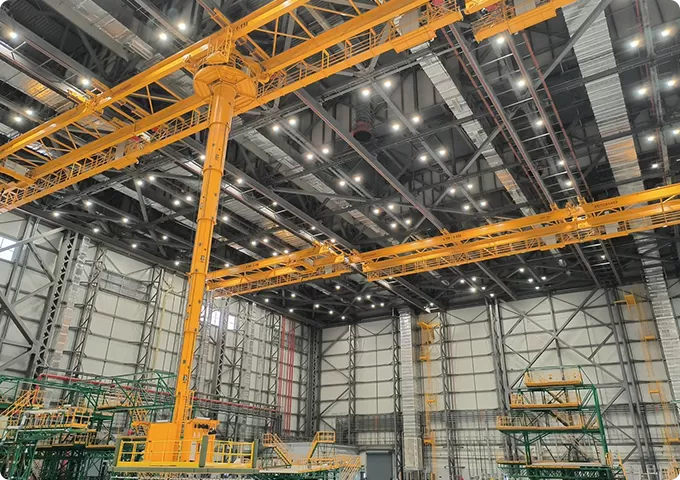
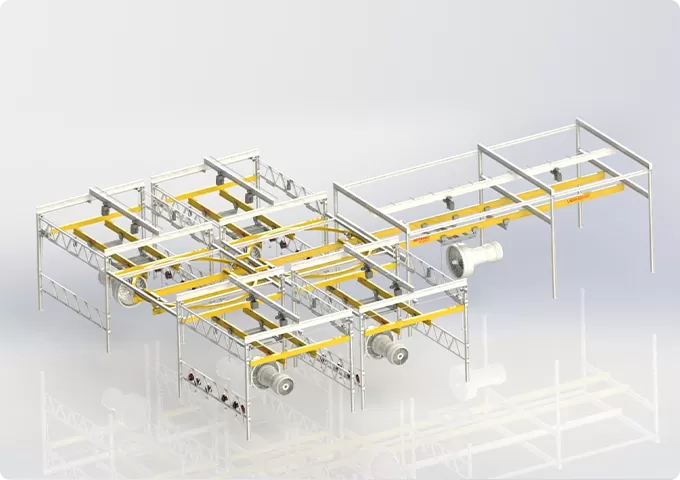
FACILITY: AIRBUS A330 MRO HANGAR
CRANE WITH 6 SUSPENSION POINTS AND WALKWAY
10t load capacity
18-12-12-12-18m span
76 m total span including girder overhangs
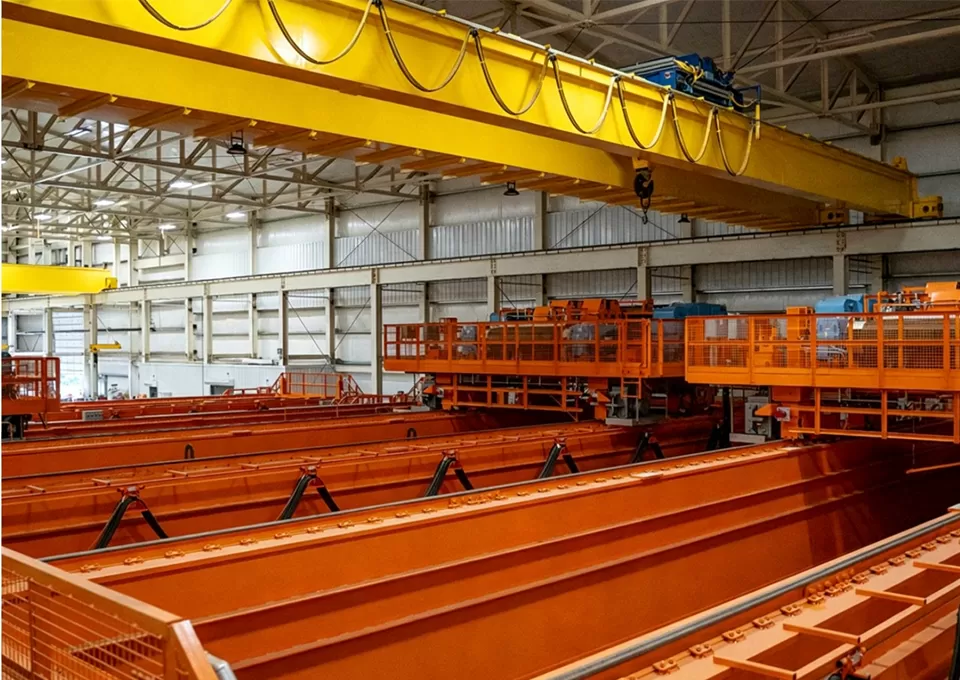
Single or double girder options available.
Designed for wide spaces, effectively covering large work areas.
Compact layout minimizes headroom requirements.
Significantly reduced self-weight leads to lower loads on the building structure.
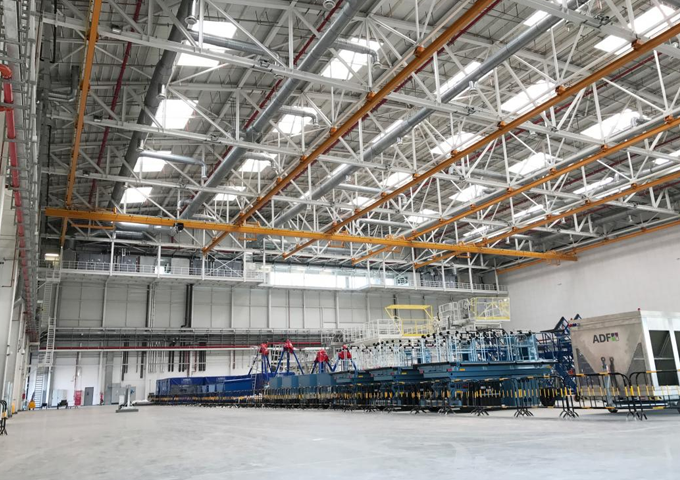
An aircraft hangar crane is a specialized overhead lifting system designed for aircraft maintenance facilities, aviation workshops, and aerospace service centers. Unlike standard industrial cranes, aircraft hangar cranes provide precise positioning, smooth operation, and reliable load control for handling aircraft components and maintenance equipment. These crane systems are commonly used for aircraft servicing, component replacement, and repair operations where safety and accuracy are critical. With customized lifting capacity, span, and control options, aircraft hangar cranes help improve maintenance efficiency while reducing manual handling risks in aviation environments.
Aircraft hangar crane systems are widely used in aviation facilities to support aircraft maintenance, repair, assembly, and component handling operations. Their flexible design allows aviation professionals to safely move heavy and sensitive equipment with high precision. Typical applications include aircraft maintenance hangars, helicopter service centers, and aviation workshops, where reliable lifting performance is required to improve workflow efficiency and operational safety.
Aircraft maintenance cranes provide controlled lifting solutions for inspection, repair, and replacement tasks in aircraft maintenance facilities. They are commonly used for handling engines, landing gear components, aircraft parts, and maintenance equipment. With precise movement and stable operation, aircraft hangar cranes help technicians position components safely and improve maintenance efficiency in MRO facilities and aviation service centers.
Helicopter lifting cranes are designed to support helicopter maintenance and repair operations where accurate positioning is essential. These cranes help move helicopter components, engines, and specialized maintenance tools safely inside service hangars. The controlled lifting capability improves operational safety and allows technicians to complete complex helicopter servicing tasks more efficiently.
Aviation workshop cranes provide efficient material handling solutions for aircraft assembly, repair, and component processing areas. They support the movement of aircraft structures, tools, and production equipment while optimizing workflow within aerospace facilities. Their flexible configuration makes them suitable for aviation manufacturing workshops and aircraft repair centers.
Aircraft hangar crane systems are designed with features that meet the strict requirements of aviation operations. Key features include precise load positioning, reliable safety systems, customized lifting capacity, and flexible control options. Depending on facility requirements, these cranes can be configured with remote control, pendant operation, or cabin control to ensure safe and efficient aircraft component handling.
| Feature | Benefit |
|---|---|
| Precise Positioning | Enables accurate aircraft component handling during maintenance and repair operations. |
| Safety System | Improves operational safety and reduces risks during lifting processes. |
| Customized Capacity | Supports different aircraft components and maintenance requirements. |
| Flexible Control | Provides suitable operation methods for different hangar environments. |
Selecting the right aircraft hangar crane requires considering the aircraft type, lifting requirements, workspace conditions, and operational frequency. Key factors include:
Lifting Capacity. Choose a crane according to the weight of aircraft components, engines, and maintenance equipment that need to be lifted.
Span and Coverage. Ensure the crane span provides sufficient working coverage for maintenance areas, service zones, and aircraft operation spaces.
Control Method. Select suitable control options, including pendant control, remote control, or cabin operation, based on safety requirements and operational preferences.
Working Environment. Consider hangar layout, available installation space, maintenance workflow, and operating conditions to ensure reliable long-term performance.
A properly configured aircraft hangar crane improves safety, efficiency, and reliability throughout aviation maintenance operations.
ORITCRANES provides customized aircraft hangar crane systems designed for aviation maintenance facilities, workshops, and specialized lifting applications. With extensive experience in industrial crane design and manufacturing, ORITCRANES delivers reliable lifting solutions tailored to different aviation requirements. From crane configuration and safety features to installation support, ORITCRANES focuses on providing efficient, durable, and safe aircraft lifting systems for global aviation industries.